
 by
by If I told you that these pentatonic shapes were ‘wrong’, what would you say?
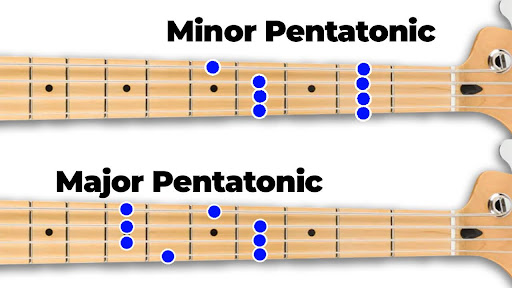
Just to be clear, these shapes ARE correct and they WILL give you the notes of whatever pentatonic scale you like…
But if you look at how bassists like:
- Pino Palladino (who played for The Who, John Mayer and tons more…)
- Paul McCartney (of the Beatles – and Wings if you’re into that kind of thing)
- Nate Watts (Stevie Wonder/Diana Ross and ironically enough, Paul McCartney)
They tend NOT to use those shapes – at least not in these specific way.
And definitely not when they want to play a cool melodic kind of idea or when they’re playing a longer line that uses a lot of the notes in a single position.
So what do they do instead?
They play a ‘diagonal’ pentatonic
Check out today’s lesson to see how they do it:
Video Not Showing Up Here? Watch On YouTube
These kind of diagonal ideas don’t usually pop up in text books or scale compendiums because they’re super idiomatic to the geometry of the bass.
But also, I’m guessing that at least some of the bassists that use them don’t even really consciously think about them as a single idea.
But if you do, then it means you can start to create and play bass lines that:
- Are efforlessly melodic
- Have a ton of variety baked in to them
- Sound so much more polished than playing a ‘standard’ pentatonic shape
There are two different versions that you can make work over a major OR a minor chord or key, so once you learn this diagonal pentatonic idea, you can get a ton of mileage (or kilometre-age if you’re metrically inclined) out of them.
Want To Go BEYOND Roots And 5ths?
If you think you’re in a bass line ‘rut’ and want MORE ideas to create bass bass lines that are both functional AND melodic, check out my Critcal Mass Bass Line Challenge. The diagonal pentatonics have been adapted from one of the daily bass line ‘models’ inside the challenge.
This bass line challenge was designed specifically for bassists who want to create catchy, original lines that go way beyond basic roots and fifths (and the occasional third) and you can check out all the details here:
Good luck with the lesson and happy playing!
Cheers,


Leave a Reply